2026-10-15
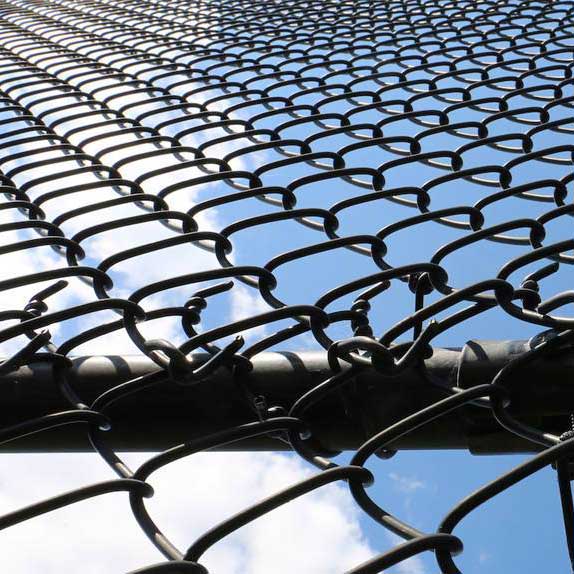
Chain link wire mesh is a versatile woven wire product made by interlocking steel wires into a diamond-shaped pattern. Its open structure, flexible configuration, and range of available wire diameters make it suitable for many residential, commercial, industrial, agricultural, and infrastructure applications.
Although chain link mesh is commonly associated with perimeter fencing, its uses extend beyond property boundaries. It can help separate work areas, protect equipment, enclose livestock, secure storage spaces, and provide practical barriers around outdoor facilities.
However, not every application requires the same mesh specification. Wire diameter, mesh opening, material, coating, roll dimensions, and installation method all influence whether a product is suitable for a particular project.
This guide explores ten common applications of chain link wire mesh and explains what buyers should consider when selecting mesh for each one.
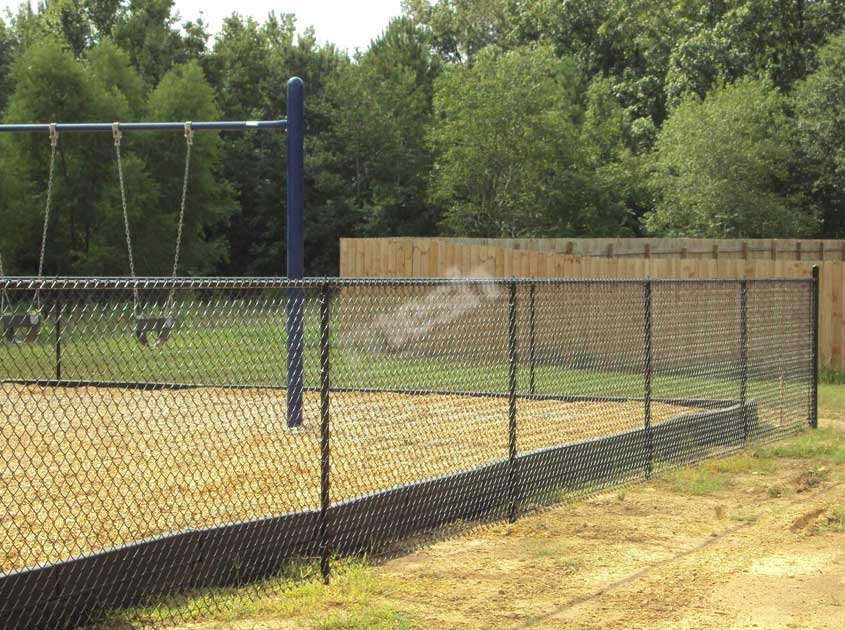
What Makes Chain Link Wire Mesh Suitable for Different Applications?
Chain link wire mesh is manufactured by weaving wires into a continuous diamond pattern. The resulting structure provides an open barrier that allows air and light to pass through while defining a boundary.
Its main characteristics include:
- Open structure: Provides visibility and airflow compared with solid barriers.
- Flexible configuration: Can be supplied in rolls and adapted to different boundary layouts.
- Multiple material options: Available in galvanized steel, PVC-coated steel, and other specifications.
- Adjustable mesh sizes: Different openings and wire diameters suit different requirements.
- Practical installation: Can be installed with suitable posts, tension wires, and fixing accessories.
- Repairability: Damaged sections can often be repaired or replaced without rebuilding the entire boundary.
The best specification depends on the intended use, expected loads, exposure conditions, and applicable project requirements.
1. Residential and Commercial Property Boundaries
One of the most common applications is defining property boundaries around houses, offices, warehouses, and commercial premises.
Chain link mesh provides a recognizable boundary without completely blocking the view. This makes it useful where property owners want to separate spaces while maintaining visibility.
Typical applications include:
- Residential gardens and yards
- Commercial property boundaries
- Warehouse perimeters
- Parking areas
- Storage compounds
- Utility facilities
What should buyers consider?
For ordinary boundary applications, buyers should evaluate mesh opening, wire diameter, fence height, post spacing, and coating. Galvanized mesh is a common option, while PVC-coated mesh may be preferred when a colored finish is required.
For projects requiring greater security, the mesh specification and supporting fence system should be assessed together.
2. Industrial Facilities and Warehouse Enclosures
Industrial sites often need to separate storage areas, define restricted zones, and organize equipment spaces.
Chain link wire mesh can be used to create boundaries around:
- Warehouse yards
- Outdoor material storage
- Factory compounds
- Loading and unloading zones
- Equipment areas
- Maintenance zones
Its open structure allows personnel to see through the enclosure, which can help with visual supervision.
For industrial projects, the buyer should also consider whether the mesh is intended for a simple boundary, an internal separation, or a security-sensitive area.
Where the enclosure must protect machinery or prevent access to hazardous equipment, the mesh opening, strength, access control, and relevant workplace safety requirements need specific assessment.
3. Sports Courts and Recreational Facilities
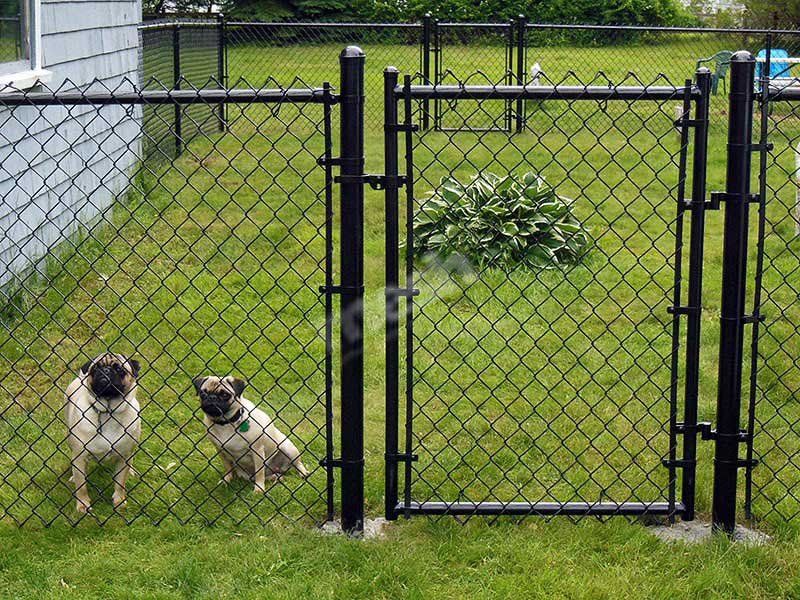
Sports facilities are another familiar application for chain link mesh.
It can be installed around:
- Tennis courts
- Basketball courts
- Baseball and softball facilities
- School playgrounds
- Community sports grounds
- Outdoor recreation areas
For sports applications, visibility and airflow are important. The mesh should also be suitable for the expected impact conditions and the height of the enclosure.
Buyers should pay attention to:
- Mesh opening
- Wire diameter
- Overall fence height
- Post strength
- Top and bottom finishing
- Potential contact with players
For ball-control applications, the required height and mesh specification should be selected according to the sport, ball type, facility layout, and project requirements.
4. Agricultural Land and Livestock Enclosures
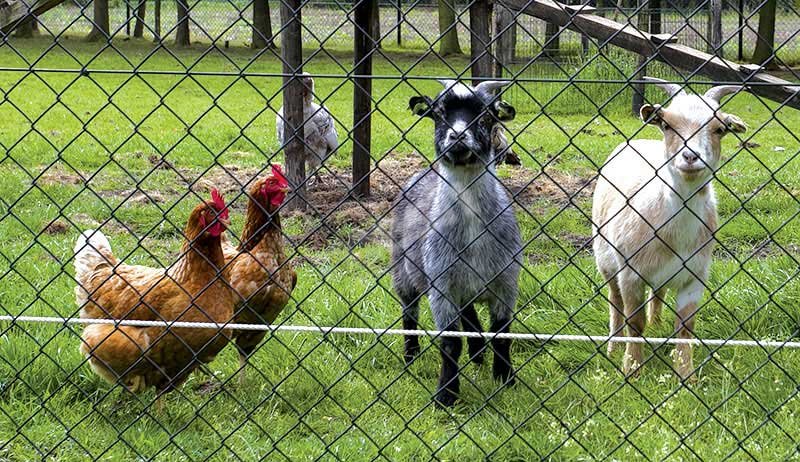
On farms, chain link wire mesh can be used around farmyards, gardens, poultry areas, equipment storage, and selected animal enclosures.
Typical uses include:
- Farmyard boundaries
- Poultry enclosures
- Small-animal runs
- Vegetable gardens
- Farm equipment storage
- Separation of working areas
The key consideration is the type of animal being enclosed.
For small animals, mesh opening must be small enough for the intended containment purpose. For larger livestock such as cattle and horses, chain link mesh may not always be the most suitable choice because animals can push against or become entangled in an inappropriate fence.
For large livestock, compare chain link with purpose-designed woven farm fencing, fixed-knot fencing, or other livestock systems before making a decision.
Agricultural buyers should also consider ground conditions, corrosion exposure, fence height, and the ease of repairing damaged sections.
5. Construction Sites and Temporary Boundaries
Construction projects often require temporary or semi-permanent boundaries to separate work areas from surrounding spaces.
Chain link mesh can be used around:
- Construction material storage
- Temporary equipment yards
- Site perimeters
- Project laydown areas
- Temporary access zones
For these applications, the main priorities are usually practical installation, suitable dimensions, transport, and the ability to remove or relocate the fencing when site requirements change.
However, chain link mesh alone does not automatically meet every construction-site safety or security requirement. Temporary fencing may need additional supports, warning signs, controlled entrances, or other measures according to local regulations and site conditions.
For contractors purchasing mesh rolls, it is useful to confirm roll length, roll height, wire diameter, and the accessories required for installation.
6. Parking Lots and Transportation Facilities
Parking lots and transportation facilities frequently use mesh fencing to separate vehicles, pedestrians, and restricted spaces.
Potential applications include:
- Commercial parking lots
- Vehicle storage areas
- Maintenance yards
- Transport depots
- Service compounds
- Perimeter boundaries near roads
Visibility can be useful in these environments because drivers and security personnel may need to see activity on the other side of the fence.
The appropriate mesh specification depends on the site's purpose. A simple parking boundary may have different requirements from a restricted vehicle storage area.
When specifying chain link mesh near roads or public access areas, buyers should also consider fence stability, impact risks, visibility requirements, and local regulations.
7. Utility, Energy, and Infrastructure Sites
Utility and infrastructure facilities often require clearly defined boundaries around operational areas.
Chain link wire mesh may be used at:
- Utility compounds
- Pumping stations
- Water treatment facilities
- Selected energy installations
- Telecommunications compounds
- Infrastructure maintenance yards
For these projects, material selection and the complete boundary system are especially important.
Buyers should evaluate the environmental exposure, required access control, fence height, post and foundation design, and any project-specific security standards.
For sites near the coast or in aggressive industrial environments, corrosion protection should be selected based on the actual exposure conditions rather than the coating name alone.
Where the project has formal engineering or security specifications, those requirements should take priority over general product recommendations.
8. Storage Cages and Internal Dividers
Chain link mesh can also be used inside buildings and warehouses rather than only around outdoor perimeters.
Common applications include:
- Storage cages
- Tool storage areas
- Warehouse partitions
- Maintenance-room boundaries
- Inventory separation
- Equipment enclosures
The open structure makes it possible to see stored items without using a solid wall.
For internal enclosures, the mesh may be installed in a frame or combined with suitable posts and access doors. The choice depends on the dimensions, required rigidity, and expected use.
Before ordering, confirm whether the mesh will be supplied as a roll for on-site fabrication or as part of a prefabricated enclosure system. These are different purchasing requirements and may involve different costs.
9. Gardens, Parks, and Landscaping
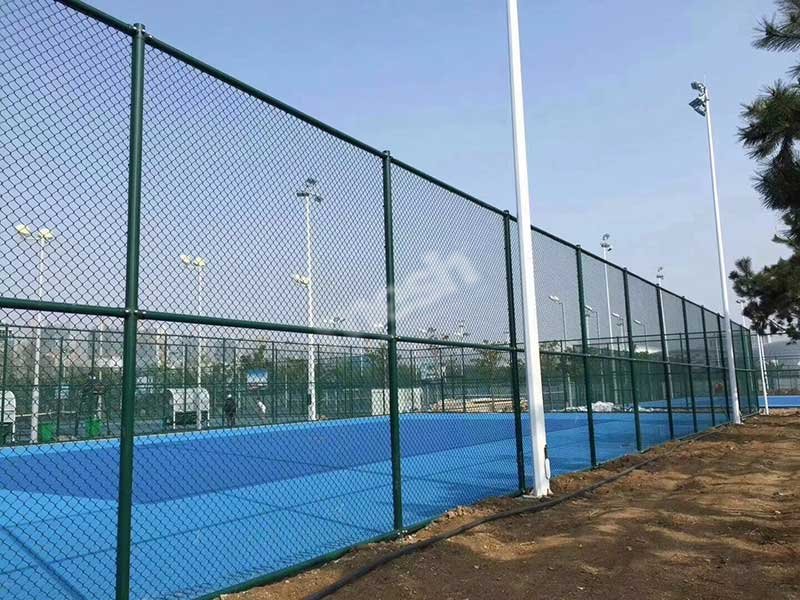
Chain link wire mesh is also used in landscape and outdoor property projects.
Typical uses include:
- Garden boundaries
- Park enclosures
- Tree-protection areas
- Community gardens
- Outdoor storage sections
- Separation of landscaped spaces
Galvanized mesh offers a metallic appearance, while PVC-coated mesh can provide a green or other specified color that blends with the surrounding environment.
For garden projects, buyers should consider the mesh height, opening size, coating, soil conditions, and visual appearance.
Where the fence will be exposed to irrigation water, fertilizer, coastal air, or persistent moisture, the coating and material should be selected accordingly.
10. Animal Runs and Specialty Enclosures
Chain link mesh is frequently considered for outdoor animal runs and specialty enclosures where visibility and airflow are useful.
Examples may include:
- Dog runs
- Kennels
- Selected animal exercise areas
- Outdoor holding enclosures
- Animal-care facilities
The correct design depends on the animal's size, behavior, ability to climb or chew, and tendency to dig or push against the enclosure.
For dogs, for example, the mesh opening, wire strength, bottom clearance, post stability, gate design, and potential escape routes all matter.
Chain link mesh should not be assumed suitable for every animal or every containment requirement. For specialized facilities, consult the applicable animal-welfare and safety standards.
How to Choose Chain Link Wire Mesh for Different Applications
The ten applications above show why the same product name can refer to very different purchasing needs.
Use the following table as a starting point for selecting a specification.
| Application | Main Selection Factors | Common Material Considerations |
| Residential boundaries | Height, opening, appearance | Galvanized or PVC-coated |
| Warehouses | Boundary purpose, rigidity, access | Galvanized or PVC-coated |
| Sports courts | Impact conditions, height, visibility | Galvanized or coated steel |
| Agriculture | Animal type, opening, ground conditions | Galvanized or PVC-coated |
| Construction sites | Roll size, installation, relocation | Often galvanized steel |
| Parking lots | Visibility, stability, site layout | Galvanized or coated steel |
| Utility facilities | Environmental exposure, project standards | Specified corrosion protection |
| Storage cages | Frame design, access, opening | Selected to suit the enclosure |
| Gardens and parks | Appearance, height, coating | Green PVC-coated or galvanized |
| Animal runs | Animal behavior, opening, containment | Specification-dependent |
These are general starting points, not fixed specifications. The required mesh size and wire diameter should be confirmed for each project.
Which Specifications Matter Most?
When requesting a quotation, provide the following details whenever possible.
1. Mesh Opening
Chain link mesh is commonly described by the size of its diamond-shaped openings. The opening affects visibility, containment, and the overall appearance of the mesh.
Make sure the measurement convention is clear so different suppliers quote comparable products.
2. Wire Diameter
Wire diameter influences the physical characteristics and weight of the mesh.
For galvanized or PVC-coated products, clarify whether the requested diameter refers to the steel wire before coating or the finished coated wire.
For example, a specification may state a 2.5 mm finished PVC-coated wire with a 2.0 mm steel core. These dimensions are not interchangeable.
3. Material and Coating
Common choices include galvanized steel and PVC-coated galvanized steel.
When evaluating galvanized products, confirm the galvanizing process and, where relevant, the zinc coating requirement. For PVC-coated products, confirm the steel core diameter, finished diameter, coating quality, and color.
4. Roll Dimensions
Roll height and length affect installation planning, packaging, and transportation.
For project orders, confirm:
- Roll height
- Roll length
- Number of rolls
- Edge configuration
- Required accessories
5. Installation Requirements
If the mesh will form part of a complete fence, clarify whether the quotation should include posts, rails, tension wires, gates, clips, or other accessories.
This helps avoid comparing a mesh-only quotation with a complete fence-system quotation.
Chain Link Wire Mesh vs. Other Mesh Types
Chain link mesh is not the only option for fencing and enclosure projects.
| Product | Structural Difference | When to Consider It |
| Chain link wire mesh | Woven diamond pattern | Flexible boundaries and open enclosures |
| Welded wire mesh | Wires welded at intersections | Rigid panels, cages, and regular grid layouts |
| Hexagonal wire mesh | Twisted hexagonal openings | Poultry mesh, garden protection, and selected agricultural uses |
| Woven farm fence | Interlocked or knotted wire structure | Purpose-designed livestock boundaries |
| 358 security mesh | Narrow rectangular openings in a rigid panel system | Projects with specific anti-climb security requirements |
The correct alternative depends on the application rather than the product's popularity.
For example, welded mesh may be more practical for a rigid storage cage, while chain link mesh may be more convenient for a long boundary requiring roll-form material.
Common Buying Mistakes to Avoid
Choosing the Lowest Price Without Checking the Specification
A lower quotation may reflect a different wire diameter, opening size, coating, or roll dimension. Compare like-for-like products before making a purchasing decision.
Ordering Mesh Without Confirming the Wire Diameter
The diameter can affect the mesh's weight and physical characteristics. Confirm the measurement basis and acceptable tolerance.
Ignoring the Installation Environment
A mesh intended for a sheltered indoor area may require different corrosion protection from one installed outdoors in a humid or coastal environment.
Buying Mesh Without Planning the Complete Fence
For perimeter projects, the mesh must work with the posts, foundations, tensioning components, and gates. A suitable mesh alone does not guarantee a suitable fence system.
Assuming One Mesh Specification Fits Every Application
A sports court, warehouse cage, farm enclosure, and utility boundary have different requirements. Define the application before choosing the product.
FAQ: Chain Link Wire Mesh Applications
What is chain link wire mesh commonly used for?
Common applications include property boundaries, warehouses, sports courts, agricultural areas, construction sites, parking lots, utility facilities, storage cages, gardens, and animal runs.
Can chain link mesh be used for industrial applications?
Yes. It can be used for industrial boundaries, outdoor storage compounds, internal partitions, and selected equipment enclosures. The specification should match the intended function and relevant safety requirements.
Is galvanized or PVC-coated chain link mesh better for outdoor use?
Both can be suitable, depending on the product specification and exposure conditions. Consider the galvanizing quality, coating details, environment, appearance, and maintenance requirements.
Can chain link wire mesh be customized?
Many manufacturers offer different mesh openings, wire diameters, heights, roll lengths, materials, and coatings. Confirm the available production range with the supplier.
What information is needed for a chain link mesh quotation?
At minimum, provide the mesh opening, wire diameter, material or coating, roll height, roll length, quantity, destination market, and intended application. Drawings or reference photographs can help clarify unusual requirements.
Is chain link mesh suitable for livestock?
It may be suitable for selected agricultural enclosures, but suitability depends on the animal, mesh opening, wire strength, fence height, and installation. For cattle and horses, compare purpose-designed farm fencing options before deciding.
Conclusion: Start with the Application, Then Specify the Mesh
Chain link wire mesh is a practical option for many boundary and enclosure projects because of its diamond-pattern structure, visibility, airflow, and flexible roll format.
Its applications range from residential yards and sports facilities to warehouses, farms, construction sites, and infrastructure compounds. Each application, however, calls for a different balance of mesh opening, wire diameter, coating, dimensions, and installation requirements.
For importers, distributors, contractors, and project buyers, the most efficient way to source the right product is to identify the intended use first and then confirm the technical specification.
Looking for chain link wire mesh for a commercial, industrial, agricultural, or fencing project? Share your required mesh opening, wire diameter, coating, roll dimensions, quantity, and destination market with your supplier to receive a more accurate quotation.
prev:How Is Welded Wire Mesh Made? A Step-by-Step Manufacturing Process
next:How Long Can Galvanized Wire Mesh Last? Lifespan, Corrosion Factors and Buying Guide


.jpg "Duplex Stainless Steel Wire Mesh UNS S31803(S32205)")