2026-08-27
Stainless steel wire mesh is a versatile metal mesh used in filtration, screening, separation, architecture, food processing, chemical processing, mining, petroleum, construction, and industrial manufacturing.
Compared with ordinary steel wire mesh, stainless steel wire mesh offers excellent corrosion resistance, good mechanical strength, dimensional stability, and a clean metallic appearance.
However, "stainless steel wire mesh" is not a single product. Different stainless steel grades, wire diameters, mesh counts, weave patterns, and surface finishes can produce very different performance characteristics.
For buyers, distributors, engineers, and project contractors, understanding these differences is essential when selecting the right mesh.
This guide explains the main types and grades of stainless steel wire mesh, how mesh specifications work, where different products are used, and what to consider before purchasing.
What Is Stainless Steel Wire Mesh?
Stainless steel wire mesh is a mesh product manufactured by weaving or welding stainless steel wires into a regular structure.
Depending on the manufacturing process, it can be supplied as:
Woven wire mesh
Welded wire mesh
Crimped wire mesh
Decorative woven mesh
Dutch weave mesh
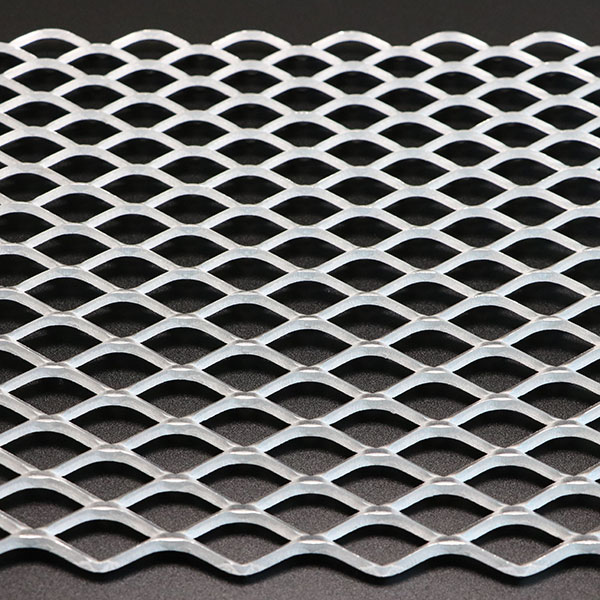
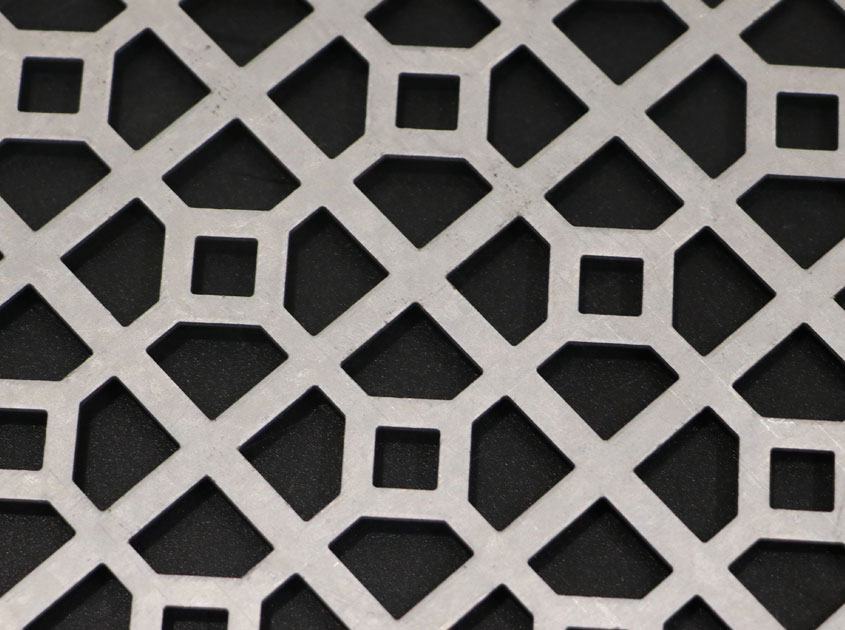
Expanded or perforated-related mesh products
Among these, woven stainless steel wire mesh and welded stainless steel wire mesh are two of the most common categories.
The mesh can be manufactured in different:
Wire diameters
Mesh openings
Mesh counts
Widths
Lengths
Weave patterns
Why Is Stainless Steel Used for Wire Mesh?
The main advantage of stainless steel is its resistance to corrosion.
Depending on the grade, stainless steel wire mesh can perform well in environments exposed to:
Moisture
Humidity
Outdoor conditions
Chemicals
Food-processing environments
Marine atmospheres
Stainless steel also provides good strength and a clean appearance.
This makes it suitable for both industrial and architectural applications.
Main Stainless Steel Wire Mesh Types
1. Woven Stainless Steel Wire Mesh
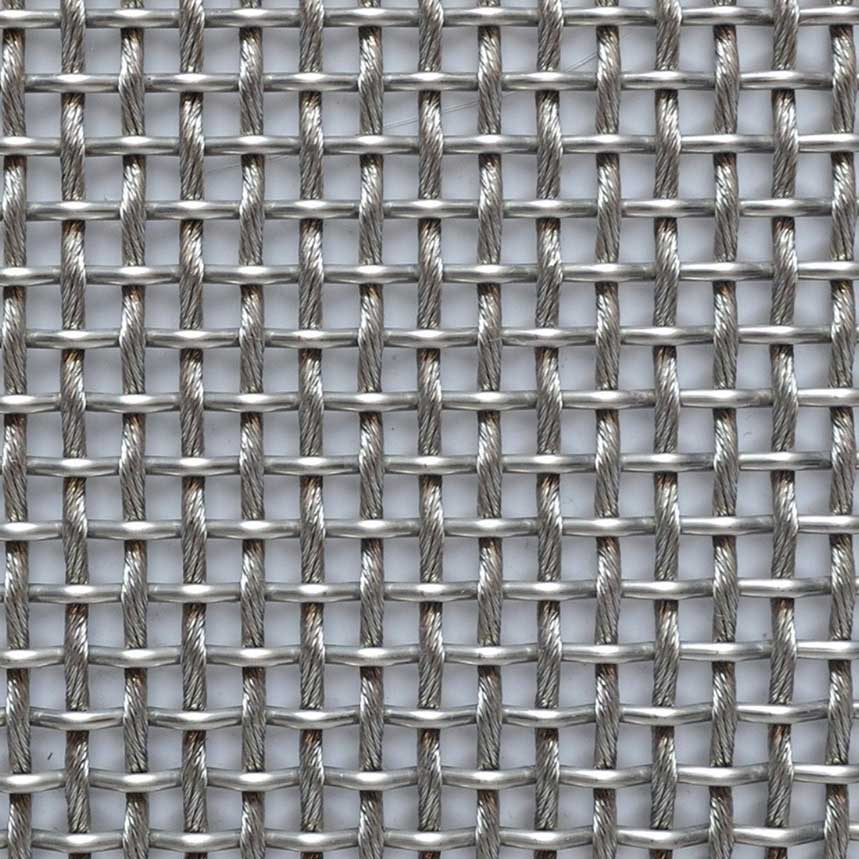
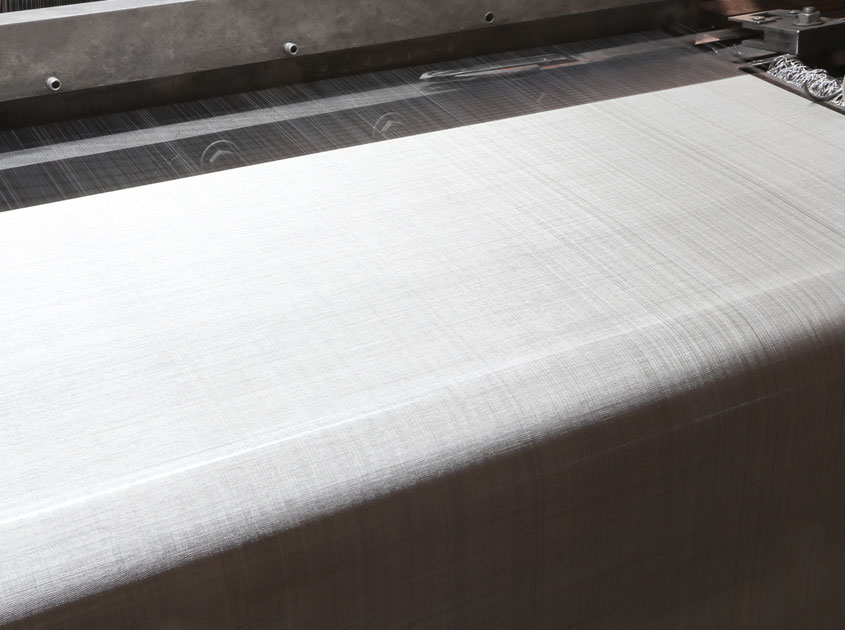
Woven mesh is manufactured by interweaving horizontal and vertical wires.
Common weave patterns include:
Plain weave
Twill weave
Dutch weave
Woven mesh is widely used for:
Filtration
Screening
Sieving
Particle separation
Industrial processing
2. Stainless Steel Welded Wire Mesh
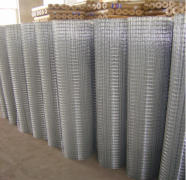
Welded wire mesh is manufactured by welding horizontal and vertical wires together at every intersection.
Its main characteristics are:
High rigidity
Uniform openings
Stable dimensions
Easy fabrication
It is commonly used for:
Machine guards
Animal enclosures
Industrial partitions
Construction
Ventilation
Architectural applications
3. Stainless Steel Crimped Wire Mesh
Crimped mesh uses pre-crimped wires to create a rigid mesh structure.
It is commonly used for:
Screening
Mining
Quarrying
Aggregate processing
Heavy-duty applications
The crimping provides additional structural stability.
4. Stainless Steel Dutch Weave Mesh
Dutch weave mesh uses different wire configurations in the warp and weft directions.
It can provide very fine filtration capabilities.
Applications include:
Oil filtration
Chemical filtration
Polymer filtration
Fine particle separation
Industrial filtration
For filtration applications, buyers should specify the required filtration performance rather than selecting mesh count alone.
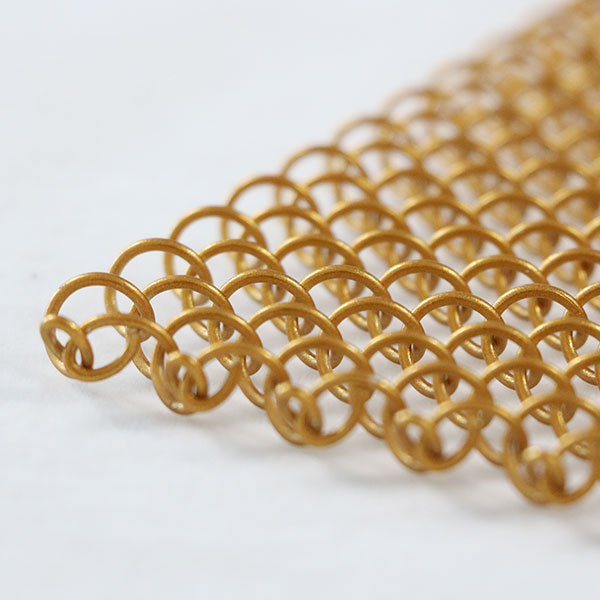
5. Stainless Steel Decorative Wire Mesh
Decorative woven mesh is designed primarily for architectural and interior applications.
It can be used for:
Building facades
Interior partitions
Elevator decoration
Ceilings
Stairways
Hotel interiors
Retail spaces
In these applications, appearance can be just as important as technical specifications.
Common Stainless Steel Grades
Not all stainless steel wire mesh provides the same corrosion resistance.
The most common grades used in wire mesh include:
304
316
316L
201
Other grades may be available for specialized applications.
Stainless Steel 304 Wire Mesh
304 stainless steel is one of the most widely used grades.
It provides a good balance between:
Corrosion resistance
Strength
Formability
Availability
Cost
It is commonly used for:
Industrial screening
Food processing
General filtration
Construction
Architectural mesh
Decorative applications
For many general-purpose applications, 304 is an economical starting point.
Stainless Steel 316 Wire Mesh
316 stainless steel provides better resistance to certain corrosive environments than 304.
Its composition includes molybdenum, which improves resistance to chloride-related corrosion.
It is often considered for:
Marine environments
Coastal areas
Chemical processing
Outdoor architectural applications
Food and pharmaceutical environments
High-corrosion applications
The price is generally higher than 304.
Stainless Steel 316L Wire Mesh
316L is a low-carbon version of 316 stainless steel.
It is particularly useful where welding and corrosion resistance are important.
Applications may include:
Chemical equipment
Pharmaceutical equipment
Food processing
Marine applications
Architectural structures
The choice between 316 and 316L depends on the manufacturing process and environmental requirements.
Stainless Steel 201 Wire Mesh
201 stainless steel is generally considered a more economical alternative to 304 in some applications.
It can provide useful mechanical properties at a lower material cost.
However, its corrosion resistance is generally lower than 304 and 316.
Therefore, it may be suitable for:
Indoor applications
Decorative products
General-purpose applications with limited corrosion exposure
It should be selected carefully for outdoor or corrosive environments.
304 vs 316 Stainless Steel Wire Mesh
This is one of the most important comparisons for buyers.
Feature 304 Stainless Steel 316 Stainless Steel
Corrosion resistance Excellent Higher in many chloride environments
General outdoor use Good Excellent
Marine environment Moderate–good Better suited
Chemical resistance Good Better for many applications
Cost Lower Higher
Availability Very high High
General industrial use Excellent Excellent
Architectural use Excellent Excellent
A simple selection principle is:
Choose 304 when general corrosion resistance and cost efficiency are the priority.
Consider 316 when the environment is more corrosive, particularly where chloride exposure is a concern.
Understanding Stainless Steel Wire Mesh Specifications
One of the most important things when buying stainless steel mesh is understanding the specification.
A typical quotation may look like:
20 Mesh × 0.5 mm Wire Diameter × SS304
This means:
Mesh count: 20
Wire diameter: 0.5 mm
Material: Stainless steel 304
But mesh count alone does not completely define the product.
What Does "Mesh" Mean?
For woven wire mesh, mesh count generally refers to the number of openings per linear inch.
For example:
20 mesh
means there are approximately 20 openings per inch in the specified direction.
However, the actual opening size also depends on the wire diameter.
What Is Mesh Opening?
Mesh opening is the clear distance between adjacent wires.
It is usually expressed in:
Millimeters
Microns
Inches
For filtration and screening, opening size is often more important than mesh count alone.
Two meshes with the same mesh count but different wire diameters can have different opening sizes.
Why Does Wire Diameter Matter?
Wire diameter affects:
Strength
Mesh opening
Weight
Filtration characteristics
Durability
Cost
A thicker wire generally provides greater mechanical strength but reduces the available opening.
Therefore, mesh count and wire diameter should always be specified together.
Common Weave Patterns
Plain Weave
The simplest and most widely used weave.
One wire passes:
over → under → over → under
It is suitable for:
General screening
Filtration
Sieving
Industrial applications
Twill Weave
In twill weave, the wires pass over and under multiple wires according to a repeating pattern.
It can provide:
Greater wire stability
Higher wire density
Smaller openings with relatively heavy wire
It is useful for:
Filtration
Industrial screening
Higher-strength applications
Dutch Weave
Dutch weave uses a different arrangement of warp and weft wires.
It is designed particularly for fine filtration.
Applications include:
Hydraulic filtration
Oil filtration
Polymer filtration
Chemical processing
Stainless Steel Wire Mesh Applications
1. Filtration
Stainless steel mesh is widely used for filtration because it can provide controlled openings and good corrosion resistance.
Applications include:
Water filtration
Oil filtration
Chemical filtration
Gas filtration
Hydraulic filtration
Polymer filtration
The appropriate mesh should be selected according to the required particle size and pressure conditions.
2. Screening and Sieving
Stainless steel mesh can separate materials according to particle size.
It is used in:
Food processing
Pharmaceutical manufacturing
Chemical production
Mining
Powder processing
3. Food Processing
Stainless steel is widely used in food-related equipment because it is:
Corrosion resistant
Durable
Relatively easy to clean
Suitable for hygienic environments when properly specified
Applications can include:
Drying screens
Sieving
Conveyor components
Food processing equipment
The specific stainless steel grade and regulatory requirements should be confirmed for food-contact applications.
4. Chemical Industry
Chemical processing environments may expose mesh to aggressive substances.
316 or other specialized stainless steel grades may be considered depending on the chemicals involved.
Applications include:
Filters
Screens
Separation equipment
Process equipment
Material compatibility should always be evaluated for the actual chemical environment.
5. Construction
Welded stainless steel mesh can be used for:
Ventilation openings
Safety barriers
Machine guards
Decorative structures
Building components
6. Architecture
Architectural stainless steel mesh has become increasingly popular in modern building design.
It can be used for:
Facades
Interior partitions
Elevator interiors
Stairways
Ceilings
Decorative screens
The combination of durability and metallic appearance makes stainless steel particularly attractive for architectural projects.
7. Mining and Aggregate Processing
Heavy-duty stainless steel crimped mesh can be used for:
Vibrating screens
Aggregate screening
Particle separation
Quarrying applications
The mesh specification should be selected according to the material being screened and the operating conditions.
8. Security and Machine Protection
Welded stainless steel mesh can be used to create:
Machine guards
Equipment protection
Safety partitions
Ventilation barriers
The rigid welded structure makes it suitable for many industrial protection applications.
Stainless Steel Wire Mesh for Architecture
Architectural applications require a different approach from industrial filtration.
For example, a designer may care more about:
Mesh appearance
Transparency
Reflection
Texture
Color
Surface finish
than simply the opening size.
Stainless steel architectural mesh can therefore be customized to achieve a particular visual effect.
Brushed vs Polished Stainless Steel Mesh
Surface finish can significantly change the appearance.
Brushed Finish
Creates a softer and more understated appearance.
Suitable for:
Modern interiors
Elevators
Commercial buildings
Polished Finish
Provides stronger reflection and a brighter metallic appearance.
Suitable for:
Decorative interiors
Luxury projects
Feature walls
Stainless Steel Wire Mesh vs Galvanized Wire Mesh
Feature Stainless Steel Mesh Galvanized Mesh
Corrosion resistance Excellent Good
Material Stainless steel Carbon steel + zinc
Appearance Premium metallic Traditional galvanized
Strength High High
Cost Higher Lower
Marine environments Better with appropriate grade More limited
Architectural applications Excellent Moderate
Industrial filtration Excellent Limited depending on application
For general fencing and economical industrial applications, galvanized mesh may be more appropriate.
For filtration, corrosive environments, and premium architectural applications, stainless steel often provides greater value.
How to Choose the Right Stainless Steel Wire Mesh?
Step 1: Define the Application
Determine whether the mesh is needed for:
Filtration
Screening
Sieving
Fencing
Machine protection
Architecture
Food processing
Chemical processing
Step 2: Select the Stainless Steel Grade
A simple starting point is:
201 → Lower-cost indoor/decorative applications
304 → General-purpose corrosion resistance
316 → More demanding corrosive environments
316L → Applications where low-carbon stainless steel is advantageous
The correct grade should ultimately be determined by the actual environment.
Step 3: Determine the Opening Size
Ask:
What size of material needs to pass through the mesh?
For filtration and screening, this is one of the most important parameters.
Step 4: Select Wire Diameter
Thicker wire generally means:
Greater strength
Higher weight
Smaller opening at the same mesh count
The wire diameter must therefore balance strength and opening requirements.
Step 5: Select the Weave
Choose between:
Plain weave
Twill weave
Dutch weave
Crimped
Welded
based on the required performance.
Step 6: Confirm Dimensions
For rolls, specify:
Width
Length
For panels, specify:
Width
Height
For architectural mesh, also specify:
Installation direction
Edge treatment
Fixing system
Common Mistakes When Buying Stainless Steel Mesh
Mistake 1: Specifying Only "304 Mesh"
"304 mesh" is not a complete specification.
You should also specify:
Mesh count + wire diameter + weave + dimensions
Mistake 2: Choosing 316 Automatically
316 offers excellent corrosion resistance, but it is not always necessary.
For many general applications, 304 may provide sufficient performance at a lower cost.
Mistake 3: Comparing Mesh Count Without Wire Diameter
A 20-mesh product with one wire diameter can have a different opening from another 20-mesh product with a different wire diameter.
Always compare the complete specification.
Mistake 4: Ignoring the Operating Environment
Consider:
Humidity
Salt exposure
Chemicals
Temperature
Outdoor exposure
Cleaning chemicals
The environment should determine the stainless steel grade.
Stainless Steel Wire Mesh Buying Checklist
Before placing an order, confirm:
Material
201
304
316
316L
Other required grade
Mesh
Mesh count
Opening size
Wire
Diameter
Tolerance
Structure
Plain weave
Twill
Dutch
Welded
Crimped
Dimensions
Width
Length
Panel dimensions if applicable
Finish
Standard
Polished
Brushed
Other finish
Packaging
Roll
Panel
Customized packaging
Frequently Asked Questions
What is the best stainless steel grade for wire mesh?
There is no single best grade. 304 is a common general-purpose choice, while 316 is often preferred for more corrosive environments, especially where chloride exposure is significant.
Is 304 stainless steel mesh suitable for outdoor use?
Yes, 304 can be suitable for many outdoor applications. However, coastal, marine, or highly corrosive environments may justify considering 316.
What is the difference between 304 and 316 mesh?
The primary difference is corrosion resistance. 316 generally provides better resistance in chloride-containing environments, while 304 is usually more economical for general applications.
Is stainless steel wire mesh stronger than galvanized wire mesh?
Not necessarily. Strength depends on the alloy, wire diameter, mesh structure, and manufacturing process. Stainless steel's main advantage is often its combination of strength and corrosion resistance.
Can stainless steel wire mesh be customized?
Yes. Mesh count, wire diameter, material grade, weave pattern, width, length, and surface finish can be customized for many applications.
What stainless steel mesh is best for filtration?
The appropriate product depends on the required opening size, filtration accuracy, pressure, temperature, and chemical environment. Plain weave is common for general filtration, while Dutch weave can be suitable for finer filtration.
Why Choose Qunkun Metal Stainless Steel Wire Mesh?
Qunkun Metal supplies stainless steel wire mesh for industrial manufacturers, filtration companies, distributors, contractors, architects, engineers, and international B2B buyers.
Available stainless steel grades include:
SS201
SS304
SS316
SS316L
Products can be supplied as:
Woven wire mesh
Welded wire mesh
Crimped wire mesh
Dutch weave mesh
Decorative architectural mesh
Specifications can be customized according to:
Mesh Count + Wire Diameter + Opening + Weave + Width + Length + Grade + Finish
Applications include:
Filtration + Screening + Food Processing + Chemical Processing + Construction + Architecture + Industrial Protection
For a quotation, customers can provide the required stainless steel grade, mesh opening or mesh count, wire diameter, weave type, dimensions, application, quantity, and destination.
Conclusion
Stainless steel wire mesh is much more than a standard metal screening product.
Different combinations of:
Stainless Steel Grade + Wire Diameter + Mesh Opening + Weave + Surface Finish
can create products for completely different applications.
For general industrial applications, 304 stainless steel wire mesh often provides an effective balance between performance and cost.
For marine, coastal, chemical, and other demanding environments, 316 or 316L may provide better corrosion resistance.
For filtration, the focus should be on opening size, weave structure, and filtration requirements.
For architecture, the priorities may shift toward appearance, transparency, texture, finish, and installation.
The best stainless steel wire mesh is therefore not simply the product with the highest grade or thickest wire. It is the product whose material, structure, and specifications match the actual requirements of the project.
prev:What Is Hexagonal Wire Mesh and What Is It Used For?
next:Welded Wire Mesh: Types, Sizes, Specifications and Applications


.jpg "Duplex Stainless Steel Wire Mesh UNS S31803(S32205)")