2026-09-15
When buying stainless steel wire mesh, 304 and 316 stainless steel are two of the most commonly requested grades.
At first glance, they can look almost identical. Both have a bright metallic appearance, good mechanical strength, and excellent resistance to corrosion compared with ordinary carbon steel.
However, 304 and 316 stainless steel are not interchangeable in every application.
The main difference is their chemical composition. 316 stainless steel contains molybdenum, which gives it better resistance to chlorides and certain aggressive environments.
So, should you choose 304 stainless steel wire mesh or 316 stainless steel wire mesh?
The answer depends on the environment, application, expected service life, and budget.
What Is 304 Stainless Steel Wire Mesh?
304 stainless steel wire mesh is manufactured from 304 stainless steel wire, an austenitic stainless steel grade widely used across industrial, commercial, architectural, food-processing, and general-purpose applications.
Its popularity comes from a good balance of:
Corrosion resistance
Strength
Formability
Weldability
Availability
Cost
304 stainless steel mesh is often considered the standard choice when good corrosion resistance is required but the environment is not extremely aggressive.
What Is 316 Stainless Steel Wire Mesh?
316 stainless steel wire mesh is manufactured from 316 stainless steel wire.
Its most important characteristic is the addition of molybdenum to the alloy.
This improves resistance to:
Chlorides
Salt-containing environments
Marine exposure
Certain chemicals
Pitting corrosion
As a result, 316 stainless steel mesh is often selected for more demanding environments where 304 stainless steel may not provide the desired corrosion resistance.
304 vs 316 Stainless Steel: What Is the Main Difference?
The key difference is molybdenum.
A simplified comparison is:
Property 304 Stainless Steel 316 Stainless Steel
Chromium Approx. 18% Approx. 16–18%
Nickel Approx. 8–10.5% Approx. 10–14%
Molybdenum Normally absent Approx. 2–3%
General corrosion resistance Excellent Excellent to superior
Chloride resistance Good Better
Marine environments Moderate to good Very good
Chemical environments Good for many applications Better for many aggressive environments
Typical cost Lower Higher
Common use General industrial Marine/chemical/high-corrosion
Exact chemical composition depends on the applicable material standard and product specification.
The important purchasing point is that 316's molybdenum content is what gives it a major advantage in chloride-containing environments.
Why Does Molybdenum Matter?
Molybdenum improves stainless steel's resistance to localized corrosion, particularly pitting corrosion.
Pitting occurs when small areas of the passive surface layer break down and localized corrosion develops.
Chloride ions can make this problem more likely.
That is why 316 stainless steel is often preferred in environments involving:
Seawater
Salt spray
Marine facilities
Chloride-containing chemicals
Coastal environments
Certain chemical-processing applications
This does not mean 316 stainless steel is completely immune to corrosion.
It means that, under many chloride-rich conditions, 316 provides a higher level of resistance than 304.
Is 316 Stainless Steel Always Better Than 304?
Not necessarily.
316 has better resistance in many demanding environments, but that does not automatically make it the better choice for every project.
If the application is:
Indoors
Dry
Low-corrosion
Cost-sensitive
General industrial
Decorative
then 304 stainless steel may provide more than enough performance.
Using 316 where 304 is fully adequate can increase the material cost without providing a meaningful benefit.
The goal should be to select the right grade for the environment, not simply the more expensive grade.
304 Stainless Steel Wire Mesh Applications
304 wire mesh is widely used because it offers a strong balance between performance and cost.
Typical applications include:
Food Processing
304 stainless steel is commonly used in food-related equipment and processing environments.
Potential applications include:
Sieving
Screening
Food-processing equipment
Drying systems
Storage systems
Conveyor components
The specific stainless steel grade required should always be determined according to the food-processing environment and applicable regulations.
Industrial Screening
304 mesh can be used for:
Particle screening
Filtration
Separation
Sizing
Industrial sieving
The appropriate mesh opening and wire diameter depend on the material being processed.
Architectural Applications
304 stainless steel wire mesh is also used for:
Decorative panels
Interior partitions
Ceiling systems
Balustrades
Decorative screens
Its metallic appearance makes it suitable for modern architectural designs.
General Industrial Use
304 mesh can be used in many environments where ordinary steel would be vulnerable to corrosion.
Examples include:
Machine guards
Ventilation screens
Equipment protection
Storage racks
Industrial partitions
316 Stainless Steel Wire Mesh Applications
316 is normally selected when environmental conditions are more demanding.
Marine Applications
This is one of the clearest examples.
316 stainless steel mesh can be used in environments exposed to:
Seawater
Salt spray
Coastal air
Marine equipment
Its improved chloride resistance makes it particularly attractive for marine-related applications.
Chemical Processing
Some chemical environments require a higher level of corrosion resistance.
316 can be considered for:
Chemical processing equipment
Laboratory equipment
Chemical filtration
Protective screens
Industrial separation
However, stainless steel selection should always be based on the actual chemical concentration, temperature, exposure time, and operating conditions.
Pharmaceutical Applications
316 stainless steel is frequently considered for pharmaceutical and hygienic processing equipment where corrosion resistance and cleanliness are important.
The exact material requirement should follow the relevant project and regulatory specifications.
Coastal Architecture
For architectural projects close to the sea, 316 can provide an advantage over 304 where salt exposure is significant.
Potential applications include:
Facades
Decorative screens
Balustrades
Partitions
Exterior architectural mesh
304 vs 316 for Coastal Areas
This is one of the most common purchasing questions.
For a typical inland environment, 304 may be sufficient.
For a location exposed to:
salt air + humidity + marine conditions
316 is generally the safer choice.
However, coastal environments vary considerably.
A building several kilometers inland is not exposed to the same conditions as equipment directly exposed to seawater.
Other factors include:
Distance from the coast
Wind direction
Salt concentration
Humidity
Temperature
Cleaning frequency
Whether the mesh is sheltered or exposed
Therefore, the decision should be based on the actual project environment.
304 vs 316 for Salt Water
If the mesh will have direct or frequent exposure to seawater, 316 is generally preferred over 304.
The molybdenum-containing alloy provides improved resistance to chloride-induced corrosion.
However, 316 is not a "seawater-proof" material.
Severe marine environments may require additional engineering considerations, including:
Material grade
Surface finish
Water flow
Crevice design
Cleaning
Temperature
Mechanical damage
For highly demanding marine applications, material selection should be reviewed by the project engineer or corrosion specialist.
304 vs 316 for Food Processing
304 is widely used in food-processing environments because of its corrosion resistance, cleanability, and availability.
316 may be preferred when the processing environment contains:
Salt
Chlorides
Acidic substances
More aggressive cleaning chemicals
For example, a general dry-food screening application may not require 316.
A salt-processing or highly corrosive food-processing environment may justify the additional cost of 316.
304 vs 316 for Chemical Applications
There is no simple rule that says 316 is suitable for all chemicals.
Chemical resistance depends on:
Chemical type
Concentration
Temperature
Exposure time
Pressure
Aeration
Surface condition
316 offers improved resistance to many corrosive environments, but some chemicals can attack both 304 and 316.
For specialized chemical processing, always confirm material compatibility before ordering.
Is 316 Stronger Than 304?
This is a common misconception.
316 is not automatically stronger than 304.
The main advantage of 316 is generally its improved corrosion resistance in certain environments, rather than a dramatic increase in mechanical strength.
For wire mesh, actual performance also depends on:
Wire diameter
Mesh opening
Weaving pattern
Welded or woven construction
Heat treatment
Manufacturing quality
Therefore, do not choose 316 simply because you believe it is a much stronger wire.
304 vs 316 Wire Mesh Cost
316 stainless steel wire mesh normally costs more than 304 mesh.
The price difference comes primarily from the alloy composition and raw material cost.
For a large project, the difference can become significant.
For example, if a buyer is purchasing hundreds or thousands of square meters of mesh, upgrading every component from 304 to 316 may substantially increase the total material cost.
This is why proper material selection matters.
Use 304 where it is sufficient. Use 316 where the environment justifies it.
How to Identify 304 and 316 Stainless Steel Wire Mesh
Visual inspection alone is generally not enough.
304 and 316 stainless steel can look almost identical.
Reliable identification may involve:
Material Certificates
Ask the supplier for a material test certificate or mill certificate where applicable.
Chemical Analysis
Professional material analysis can identify alloy composition.
PMI Testing
Positive Material Identification (PMI) equipment can analyze the chemical composition of metal.
For high-value projects, PMI can help verify whether the supplied material matches the specified grade.
Supplier Traceability
A reliable manufacturer should be able to provide traceability for the raw material and production batch where required.
Can a Magnet Tell the Difference Between 304 and 316?
Not reliably.
This is another common misconception.
Both 304 and 316 are austenitic stainless steels and are generally non-magnetic in their fully annealed condition.
However, cold working during wire drawing, weaving, or other manufacturing processes can increase magnetic response.
Therefore:
A magnet test cannot reliably distinguish 304 from 316.
A weak magnetic response does not automatically mean the material is 304, and no magnetic response does not automatically prove it is 316.
For critical applications, chemical analysis or PMI testing is much more reliable.
304 vs 316 Stainless Steel Wire Mesh: Woven or Welded?
Both 304 and 316 stainless steel can be manufactured into different mesh structures.
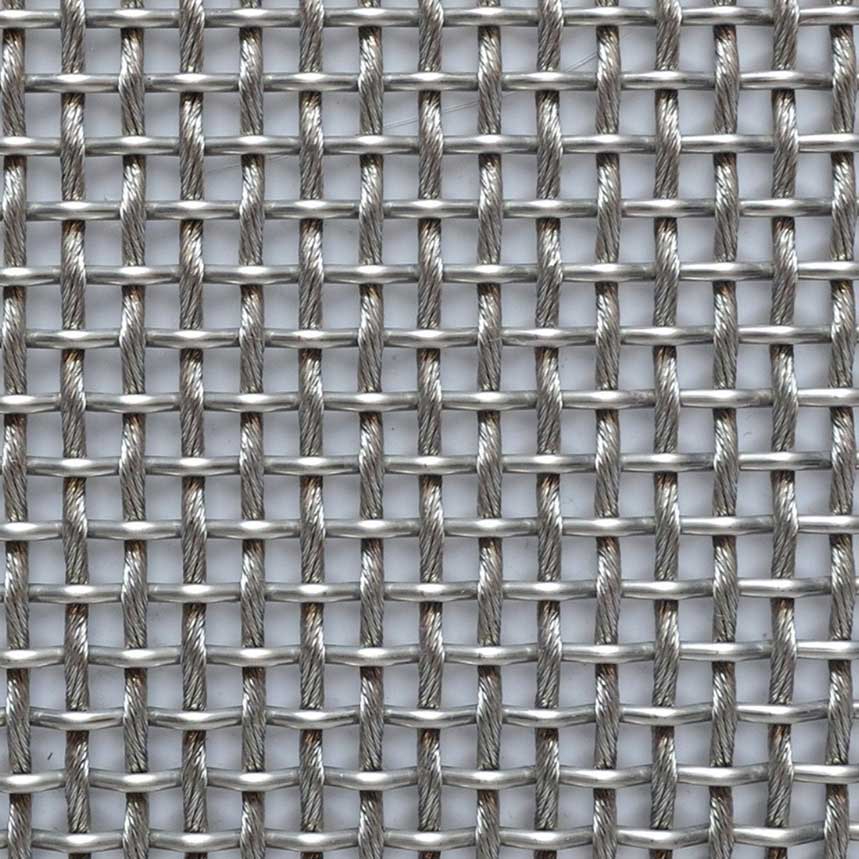
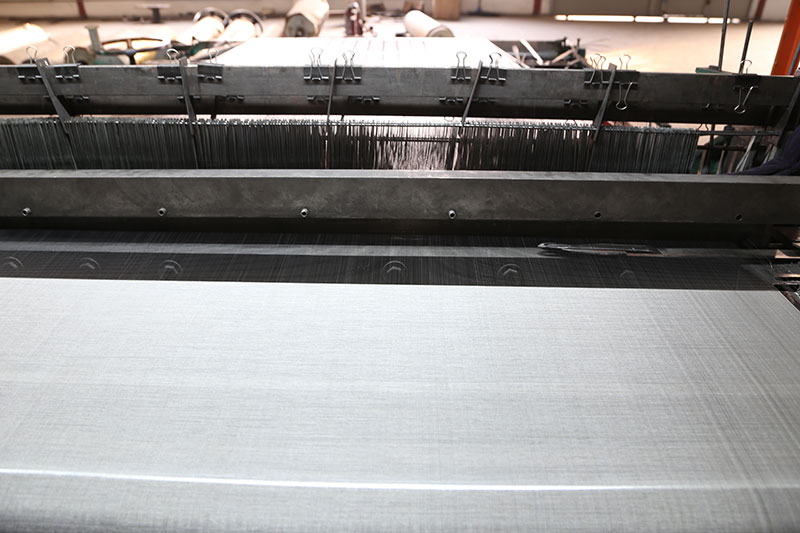
Woven Wire Mesh
Woven mesh is produced by interlacing wires.
Common patterns include:
Plain weave
Twill weave
Dutch weave
Other specialized weaves
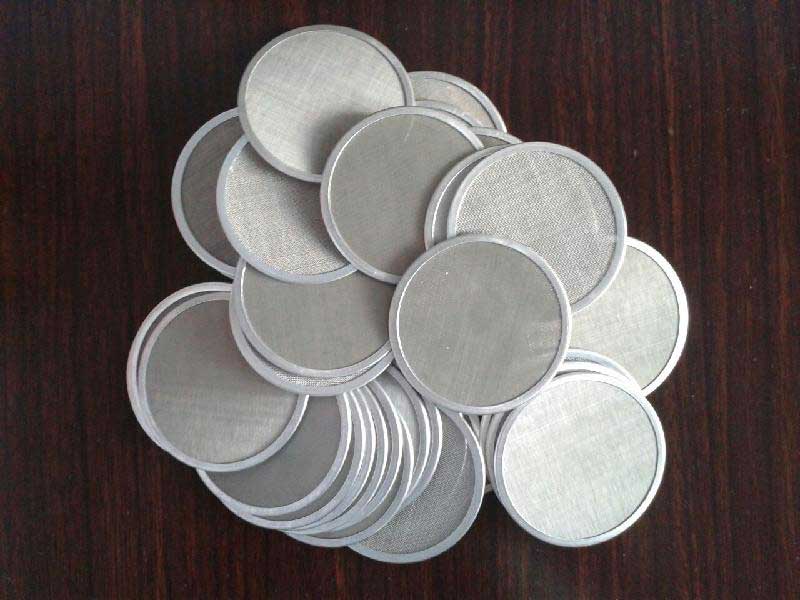
Woven mesh is widely used for filtration and screening.
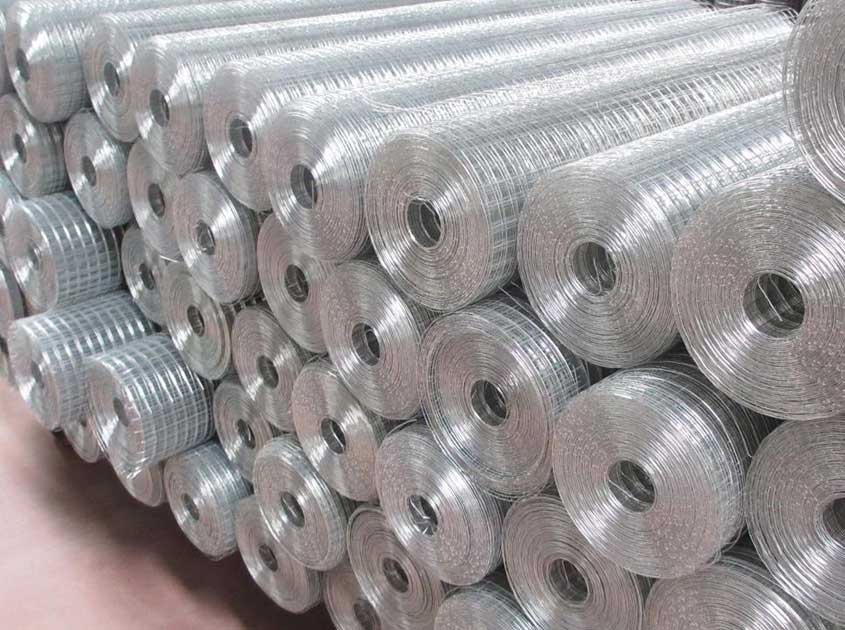
Welded Wire Mesh
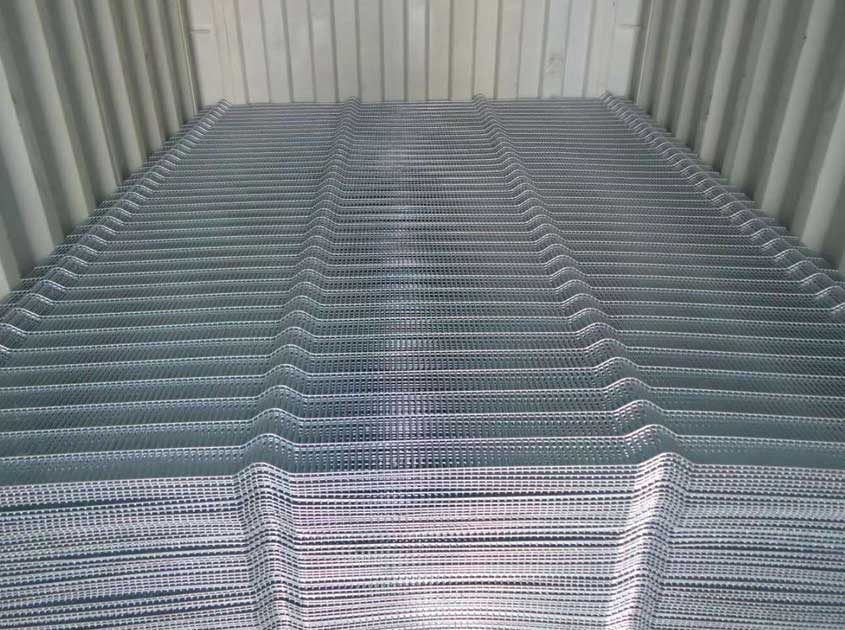
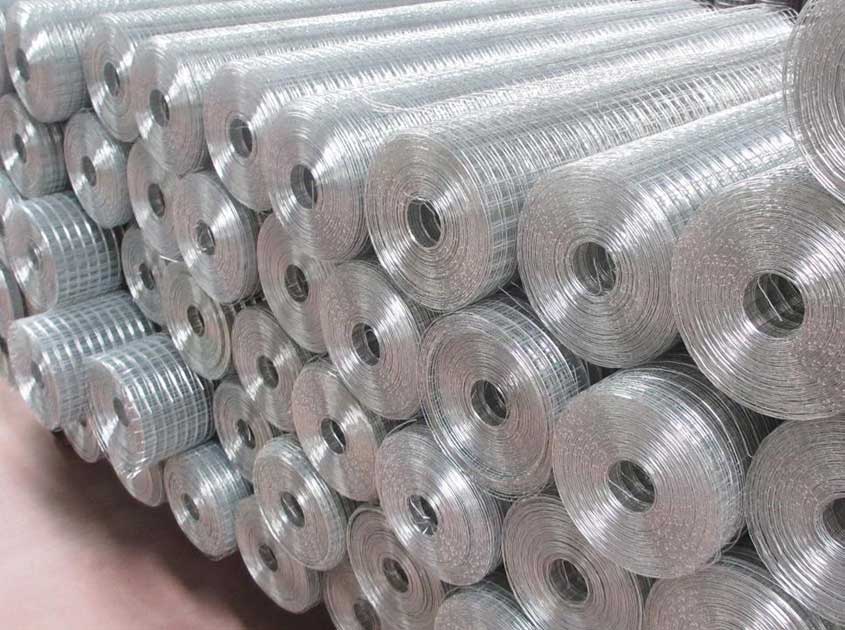
Welded stainless steel mesh is produced by welding wires at their intersections.
It is commonly used for:
Guards
Partitions
Cages
Architectural applications
Equipment protection
Common Stainless Steel Wire Mesh Specifications
When requesting a quotation, buyers should specify more than simply "304 mesh" or "316 mesh."
Important parameters include:
Specification Example
Material SUS 304 / SUS 316
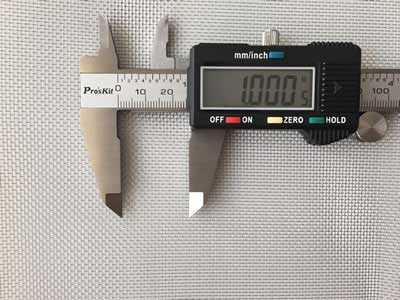
Mesh opening 1 mm / 5 mm / 10 mm
Wire diameter 0.3 mm / 0.5 mm / 1.0 mm
Weave Plain / Twill / Dutch
Mesh width 1.0 m / 1.22 m / custom
Mesh length Standard/custom
Surface Bright / polished / custom
Quantity m² / rolls
Application Filtration / screening / fencing
Destination Port or country
For welded mesh, also specify:
Panel or roll
Welding spacing
Panel dimensions
Edge treatment
304 vs 316 Mesh Opening and Wire Diameter
Material grade is only one part of the specification.
Consider two products:
304 stainless steel, 10 × 10 mm mesh, 1.0 mm wire
and
316 stainless steel, 25 × 25 mm mesh, 1.0 mm wire
The second product is not automatically stronger or better simply because it is 316.
The mesh opening determines the screening or barrier function, while wire diameter affects structural characteristics.
Always evaluate the entire specification.
How to Choose Between 304 and 316
A simple decision process is:
Choose 304 If:
The environment is relatively mild
Cost efficiency is important
The application is indoors
General corrosion resistance is sufficient
The mesh is used for general industrial screening
There is no significant chloride exposure
Choose 316 If:
The application is near seawater
Salt exposure is significant
Chlorides are present
The environment is highly corrosive
The project specification requires 316
Long-term corrosion resistance is a priority
304 vs 316: Quick Decision Table
Application Recommended Grade
General indoor screening 304
General industrial mesh 304
Dry food processing 304
General architectural mesh 304
Outdoor general use 304
Coastal environment 316 often preferred
Marine equipment 316
Seawater exposure 316
Chloride-rich environment 316
Aggressive chemical environment 316 may be preferred
Highly specialized project Follow engineering specification
This is a general guide, not a substitute for a material compatibility assessment.
Buying 304 or 316 Stainless Steel Mesh From China
China is a major manufacturing and exporting base for stainless steel wire mesh.
For international buyers, a professional supplier should be able to provide different combinations of:
304 stainless steel
316 stainless steel
Different wire diameters
Different mesh openings
Woven mesh
Welded mesh
Dutch weave
Plain weave
Twill weave
Custom widths
Custom lengths
For B2B orders, buyers should ask for a technical quotation rather than only a price per roll.
What Should You Ask a Stainless Steel Mesh Supplier?
A clear inquiry might look like this:
Product: Stainless steel woven wire mesh
Material: SUS 304
Mesh: 20 mesh
Wire diameter: 0.4 mm
Width: 1.0 m
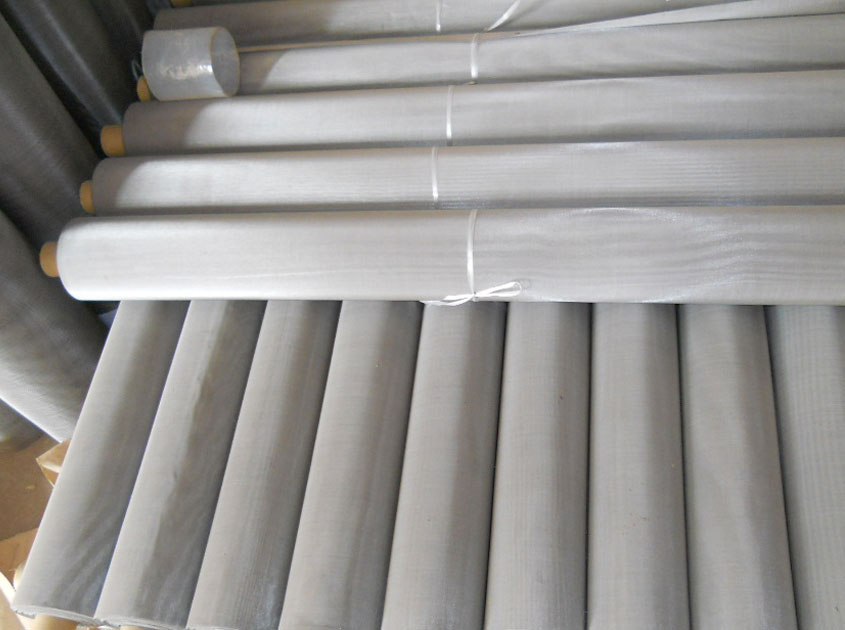
Length: 30 m/roll
Quantity: 100 rolls
Application: Industrial filtration
Destination: Required port
For 316 mesh, simply specify the required grade.
If the application is corrosive, also describe the operating environment.
For example:
The mesh will be used outdoors near the coast and exposed to salt spray.
This information can help the manufacturer recommend a more appropriate material.
Quality Control for 304 and 316 Mesh
For commercial and industrial orders, quality control should cover more than appearance.
Important inspection points include:
Material Grade
Verify 304 or 316 according to the agreed specification.
Wire Diameter
Measure the wire diameter at multiple points.
Mesh Opening
Check mesh dimensions against the required tolerance.
Weaving or Welding
Inspect the consistency of the mesh structure.
Surface Condition
Check for:
Rust
Stains
Broken wires
Loose wires
Surface damage
Uneven finish
Roll Dimensions
Confirm width, length, and packaging.
For critical applications, material certificates and third-party inspection may also be appropriate.
Common Buying Mistakes
Mistake 1: Choosing 316 Simply Because It Is "Better"
316 is more corrosion-resistant in many environments, but 304 may already be sufficient.
Choosing the more expensive grade without a technical reason can unnecessarily increase project costs.
Mistake 2: Using 304 in a Highly Chloride-Rich Environment
If the mesh is exposed to seawater or significant chloride contamination, 304 may not provide the desired corrosion resistance.
Mistake 3: Trying to Identify the Grade by Appearance
304 and 316 can look almost identical.
Visual inspection is not a reliable material identification method.
Mistake 4: Using a Magnet as the Only Test
Magnetism is affected by manufacturing and cold working.
It cannot reliably distinguish 304 from 316.
Mistake 5: Ignoring Wire Diameter
Material grade does not tell you the complete mechanical specification.
Always confirm wire diameter and mesh opening.
304 vs 316: Which One Should You Choose?
The simplest answer is:
Choose 304 stainless steel wire mesh for general-purpose corrosion-resistant applications where the environment is relatively mild.
Choose 316 stainless steel wire mesh when chloride exposure, marine conditions, or more aggressive environments make additional corrosion resistance important.
The decision should be based on the environment—not simply on the material's price or reputation.
For many general applications, 304 offers an excellent balance between performance and cost.
For demanding coastal, marine, chemical, or chloride-rich applications, 316 can provide a valuable additional margin of corrosion resistance.
Frequently Asked Questions
Is 316 stainless steel mesh better than 304?
316 generally provides better resistance to chloride-induced corrosion, while 304 is often more economical and sufficient for many general-purpose applications.
Is 304 stainless steel good for outdoor use?
Yes. 304 stainless steel can perform well in many outdoor environments. However, coastal and chloride-rich environments may favor 316.
Can 304 stainless steel be used near the sea?
It can be used in some coastal applications, but the suitability depends on the level of salt exposure and project requirements. 316 is generally preferred for more severe marine exposure.
Is 316 stainless steel rustproof?
No stainless steel should be considered completely rustproof under every condition. 316 provides improved corrosion resistance in many aggressive environments but can still corrode under severe conditions.
Is 316 stronger than 304?
Not necessarily. The primary advantage of 316 is improved corrosion resistance in certain environments, not simply higher strength.
Can a magnet distinguish 304 from 316?
No. A magnet is not a reliable method for distinguishing these grades, particularly after wire processing.
How can I verify whether stainless steel mesh is really 304 or 316?
Material certificates, supplier traceability, and professional chemical analysis or PMI testing are more reliable than visual or magnetic inspection.
Is 304 cheaper than 316?
Generally, yes. 304 is normally less expensive because 316 contains additional alloying elements, including molybdenum.
Can both 304 and 316 be used for woven wire mesh?
Yes. Both grades are widely available in woven wire mesh, with different mesh counts, wire diameters, and weave patterns.
Conclusion
The choice between 304 and 316 stainless steel wire mesh ultimately comes down to the environment and the required level of corrosion resistance.
304 is an excellent general-purpose stainless steel grade, offering a strong balance of:
Corrosion resistance
Strength
Weldability
Availability
Cost
316 provides an additional advantage in environments involving:
Chlorides
Salt spray
Seawater
Marine exposure
Certain aggressive chemicals
The most important difference is the presence of molybdenum in 316 stainless steel, which improves resistance to localized corrosion in many chloride-containing environments.
For B2B buyers, do not request a quotation using only "stainless steel wire mesh."
Specify the grade, mesh opening, wire diameter, weave, width, length, quantity, application, and destination.
Choosing the correct material at the beginning can help avoid unnecessary costs while providing the corrosion resistance required for the actual project.
Need 304 or 316 Stainless Steel Wire Mesh?
Qunkun Metal supplies stainless steel wire mesh in 304 and 316 grades for distributors, industrial buyers, filtration companies, contractors, and project customers.
Send us your required material grade, mesh specification, quantity, application, and destination for a factory-direct quotation.
prev:Welded Wire Mesh: Types, Sizes, Specifications and Applications
next:none
.png "Qunkun Metal - China wire mesh manufacturer")


.jpg "Duplex Stainless Steel Wire Mesh UNS S31803(S32205)")