2026-03-13
Welded wire mesh is one of the most widely used materials in modern construction projects. From concrete reinforcement and structural support to fencing, partitions, and safety enclosures, selecting the right welded wire mesh directly impacts project durability, safety, and cost efficiency.
However, not all welded wire mesh products are the same. Different construction environments, load requirements, and regional standards require different specifications. This guide explains how to select the right welded wire mesh for construction projects, helping contractors, engineers, and procurement managers make informed decisions.
1. Understand the Application Requirements
The first step in selecting welded wire mesh is clearly defining where and how it will be used.
Common construction applications include:
Concrete reinforcement (slabs, pavements, floors)
Wall reinforcement and masonry support
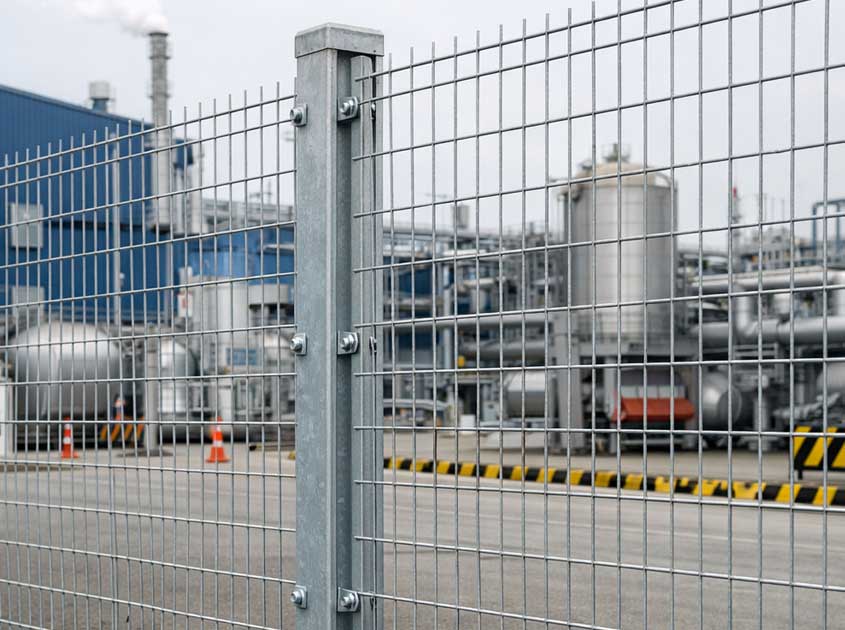
Security and perimeter fencing
Temporary site barriers
Industrial partitions and cages
Each application demands different wire diameters, mesh openings, and surface treatments. For example, concrete reinforcement requires strong weld points and precise spacing, while fencing prioritizes corrosion resistance and visual consistency.
2. Choose the Right Wire Diameter
Wire diameter directly affects the strength and load-bearing capacity of welded wire mesh.
Light wire (1.2–2.5 mm)
Suitable for plaster reinforcement, insulation support, and light fencing.
Medium wire (2.5–4.0 mm)
Commonly used for floor slabs, wall reinforcement, and residential fencing.
Heavy wire (4.0–6.0 mm and above)
Ideal for industrial floors, highways, warehouses, and high-security fencing.
Selecting the correct wire diameter ensures structural integrity without unnecessary material costs.
3. Select Proper Mesh Opening Size
Mesh opening size determines both strength distribution and functional performance.
Typical mesh sizes include:
50 × 50 mm
75 × 75 mm
100 × 100 mm
150 × 150 mm
Custom sizes upon request
For concrete reinforcement, smaller mesh openings provide better crack control. For fencing and partitions, larger openings reduce material usage and improve visibility while maintaining strength.
4. Consider Surface Treatment and Corrosion Resistance
Construction projects often face harsh environments such as humidity, rain, coastal air, or chemical exposure. Choosing the correct surface treatment is critical.
Common options include:
Electro-Galvanized Welded Wire Mesh
Smooth surface, suitable for indoor or dry environments.
Hot-Dip Galvanized Welded Wire Mesh
Thick zinc coating, ideal for outdoor construction and infrastructure projects.
PVC Coated Welded Wire Mesh
Enhanced corrosion resistance and aesthetics, often used in fencing.
Stainless Steel Welded Wire Mesh
Premium option for highly corrosive or hygienic environments.
Selecting the right coating significantly extends service life and reduces maintenance costs.
5. Roll or Panel: Which Format Is Better?
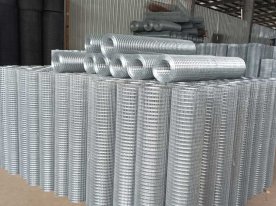
Welded wire mesh is available in rolls and panels, each serving different construction needs.
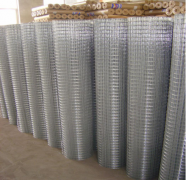
Welded Wire Mesh Rolls
Flexible and easy to transport
Ideal for large surface coverage
Commonly used for floor slabs and road reinforcement
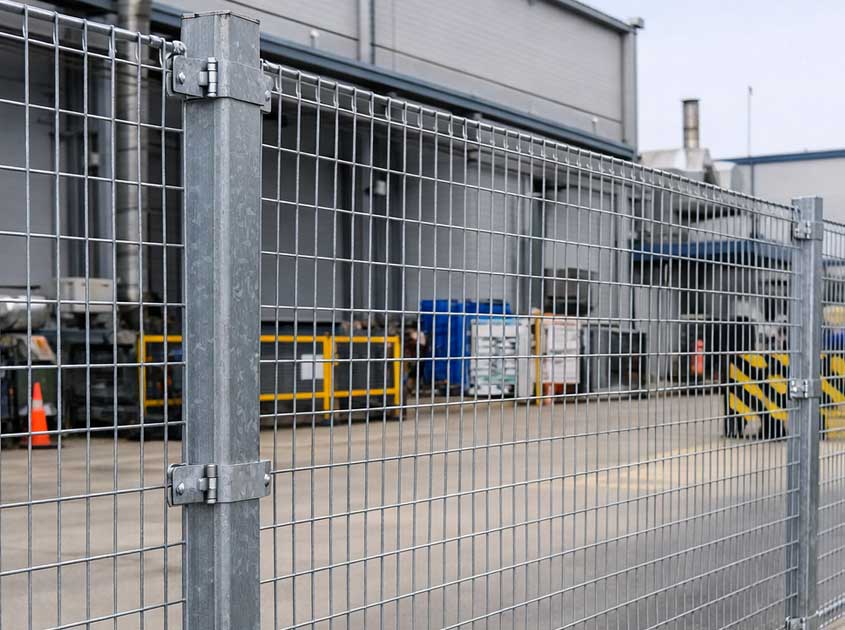
Welded Wire Mesh Panels
Rigid and flat
Precise dimensions and easy installation
Widely used in fencing, walls, and prefabricated structures
Choosing the correct format improves installation efficiency and labor savings.
6. Compliance With Construction Standards
Construction projects must comply with local and international standards. When selecting welded wire mesh, confirm compliance with:
EN standards (Europe)
ASTM standards (North America)
BS standards (UK)
Local building codes and project specifications
A professional manufacturer should provide mill certificates, material reports, and test results, ensuring quality and regulatory compliance.
7. Evaluate Welding Quality and Manufacturing Precision
High-quality welded wire mesh depends on strong and consistent weld points.
Key quality indicators include:
Uniform wire spacing
Firm weld joints without cracks
Flat surface without warping
Consistent zinc or coating thickness
Poor welding leads to mesh failure under load, increasing construction risk and long-term repair costs.
8. Cost Efficiency vs Long-Term Performance
While price is an important factor, focusing solely on low cost can be risky.
Consider:
Service life expectancy
Maintenance requirements
Replacement frequency
Structural safety
A well-selected welded wire mesh offers better long-term value, even if initial costs are slightly higher.
9. Why Work With a Professional Chinese Welded Wire Mesh Manufacturer
Choosing an experienced Chinese manufacturer offers several advantages:
Wide specification range and customization capability
Stable quality control systems
Competitive pricing for bulk orders
Fast production and export experience
Technical support for construction projects
A reliable supplier becomes a long-term partner, supporting your construction projects from design to delivery.
10. Conclusion
Selecting the right welded wire mesh for construction projects requires a clear understanding of application needs, wire diameter, mesh size, surface treatment, and standards compliance. By choosing the correct specifications and working with a professional manufacturer, construction companies can ensure structural safety, durability, and cost efficiency.
For global construction projects, sourcing welded wire mesh from an experienced Chinese manufacturer provides quality assurance, customization flexibility, and reliable supply, helping projects succeed in competitive markets.
prev:Welded Wire Mesh for Middle East Construction Projects
next:How to Choose Hexagonal Wire Mesh for Poultry and Livestock
.png "Qunkun Metal - China wire mesh manufacturer")


.jpg "Duplex Stainless Steel Wire Mesh UNS S31803(S32205)")