2026-08-26
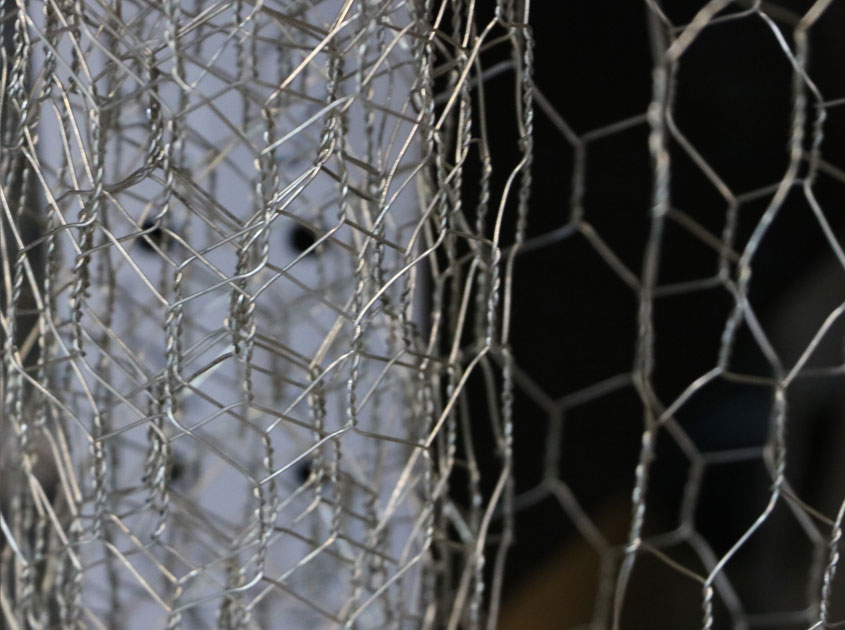
Hexagonal wire mesh is a type of wire mesh made by twisting or weaving metal wires into a series of hexagonal openings. Because of its distinctive structure, it is also commonly known as chicken wire mesh, poultry netting, or hexagonal wire netting.
It is a simple but highly versatile product. Depending on the wire diameter, mesh opening, material, and coating, hexagonal wire mesh can be used for poultry enclosures, animal cages, garden protection, agricultural applications, construction, insulation support, and erosion-control projects.
Its flexibility and relatively low material consumption also make it an economical choice for covering large areas.
This guide explains what hexagonal wire mesh is, how it is made, its main types, and where it is commonly used.
What Is Hexagonal Wire Mesh?
Hexagonal wire mesh is manufactured by interlocking or twisting wires to form a regular hexagonal pattern.
Unlike welded wire mesh, the wires are not welded at every intersection. Instead, the wire is mechanically twisted together to create the mesh structure.
The resulting mesh is:
Flexible
Lightweight
Easy to cut
Easy to install
Suitable for large-area coverage
The hexagonal openings are the most recognizable feature of the product.
How Is Hexagonal Wire Mesh Made?
The manufacturing process generally includes several steps.
1. Wire Preparation
Steel wire is drawn to the required diameter.
Depending on the product, the wire may be:
Galvanized steel wire
PVC coated steel wire
Stainless steel wire
Black annealed wire
2. Surface Treatment
The wire may be galvanized before weaving or treated after the mesh is formed.
3. Mesh Weaving
Specialized hexagonal mesh machines twist the wires together to create the hexagonal openings.
4. Cutting and Rolling
The finished mesh is cut to the required width and length and then supplied in rolls.
For export projects, the rolls are usually compressed and packaged to improve transportation efficiency.
What Are the Main Types of Hexagonal Wire Mesh?
1. Galvanized Hexagonal Wire Mesh
Galvanized hexagonal wire mesh is one of the most common types.
The zinc coating helps protect the steel wire against corrosion.
It is widely used for:
Poultry fencing
Animal enclosures
Garden fencing
Agricultural applications
General-purpose mesh
For outdoor projects, the required galvanizing level should be selected according to the expected environmental conditions.
2. PVC Coated Hexagonal Wire Mesh
PVC coated hexagonal mesh consists of steel wire covered with a PVC layer.
Common colors include:
Green
Black
White
Brown
The PVC coating provides an additional protective layer and can improve the visual appearance.
It is commonly used for:
Garden fencing
Landscape applications
Poultry enclosures
Animal cages
Decorative fencing
3. Stainless Steel Hexagonal Wire Mesh
Stainless steel hexagonal mesh provides greater corrosion resistance than ordinary steel mesh.
Common grades include:
304 stainless steel
316 stainless steel
It can be considered for:
Coastal environments
Industrial applications
Specialized animal enclosures
Areas requiring greater corrosion resistance
4. Black Annealed Hexagonal Wire Mesh
Black annealed wire can be used where corrosion resistance is less important or where the mesh will receive additional treatment.
It is generally more economical than stainless steel and can be used in certain agricultural and construction applications.
What Sizes Does Hexagonal Wire Mesh Come In?
Hexagonal wire mesh is available in different combinations of:
Wire diameter
Mesh opening
Roll width
Roll length
Coating
Common hexagonal openings include:
13 mm
16 mm
19 mm
25 mm
31 mm
40 mm
50 mm
60 mm
75 mm
The appropriate opening depends on the application.
What Wire Diameters Are Available?
Common wire diameters can range approximately from:
0.5 mm to 2.5 mm
Lighter wire is commonly used for:
Poultry
Small animal cages
Garden protection
Heavier wire can be selected for:
Agricultural fencing
Construction applications
Gabion-related products
Higher-strength requirements
The wire diameter should always be considered together with the mesh opening.
What Roll Sizes Are Available?
Hexagonal wire mesh can be manufactured in different roll dimensions.
Common widths include:
0.5 m
1.0 m
1.2 m
1.5 m
1.8 m
2.0 m
Common roll lengths include:
10 m
25 m
30 m
50 m
100 m
Custom dimensions can be produced according to project requirements.
What Is Hexagonal Wire Mesh Used For?
1. Poultry Fencing
This is one of the most recognizable applications of hexagonal wire mesh.
It is commonly used to create enclosures for:
Chickens
Ducks
Geese
Turkeys
Other poultry
Small hexagonal openings help prevent birds from escaping while allowing ventilation and visibility.
This is why the product is often called chicken wire mesh.
2. Animal Enclosures
Hexagonal wire mesh can be used for smaller animals such as:
Rabbits
Guinea pigs
Small birds
Other small farm animals
The opening size should be selected according to the animal's size.
For small animals, a smaller opening can help prevent escape.
3. Garden Protection
Gardeners use hexagonal wire mesh to protect:
Vegetables
Flowers
Seedlings
Fruit trees
Garden beds
The mesh can create a physical barrier against birds and small animals.
PVC coated green mesh is particularly suitable for landscaping because it can blend into the surrounding vegetation.
4. Agricultural Applications
Hexagonal wire mesh is widely used in agriculture.
Applications include:
Poultry houses
Animal pens
Crop protection
Farm partitions
Temporary enclosures
Its flexibility makes it convenient for irregular boundaries and large agricultural areas.
5. Tree and Plant Protection
Hexagonal mesh can be wrapped around young trees or plants to provide protection from:
Small animals
Birds
Rodents
The mesh allows sunlight and air to reach the plant while creating a physical barrier.
6. Construction Applications
Hexagonal wire mesh is also used in construction.
One example is supporting certain plastering and rendering applications.
It can help reinforce or support material on appropriate surfaces and is sometimes used around:
Wall surfaces
Ceilings
Insulation systems
Irregular structures
The exact product should be selected according to the relevant construction system and local requirements.
7. Insulation Support
Certain hexagonal wire meshes can be used to help retain insulation materials in construction applications.
The mesh can act as a supporting layer while maintaining an open structure.
The correct mesh specification depends on:
Insulation type
Installation method
Building system
Required mechanical performance
8. Erosion Control
Heavy-duty hexagonal wire mesh products can be used in certain erosion-control and civil-engineering systems.
For example, specialized hexagonal wire mesh is used in gabion structures, where the mesh forms a container that holds stones or other fill material.
Gabion systems can be used for:
Riverbank protection
Slope stabilization
Retaining structures
Channel protection
These applications require much heavier and stronger mesh than ordinary chicken wire.
Hexagonal Wire Mesh vs Welded Wire Mesh
These two products are frequently compared.
Feature Hexagonal Wire Mesh Welded Wire Mesh
Mesh shape Hexagonal Square/rectangular
Manufacturing Twisted/weaved Welded
Flexibility High Lower
Rigidity Lower Higher
Installation Easy Easy
Uneven surfaces Good adaptability Less flexible
Poultry Excellent Good
Garden Excellent Excellent
Heavy fencing Limited Better
Appearance Traditional Structured
A simple rule is:
Choose hexagonal mesh when flexibility and economical coverage are important.
Choose welded wire mesh when rigidity and structural strength are more important.
What Is the Difference Between Chicken Wire and Hexagonal Wire Mesh?
In many markets, chicken wire and hexagonal wire mesh refer to essentially the same basic product.
However, "chicken wire" usually describes the lighter types commonly used for poultry and garden applications.
"Hexagonal wire mesh" is a broader term that can include:
Light poultry mesh
Agricultural mesh
PVC coated mesh
Heavy-duty hexagonal mesh
Specialized civil-engineering mesh
Therefore, when purchasing, it is better to specify the exact wire diameter, opening size, material, and coating rather than relying only on the product name.
How to Choose the Right Hexagonal Wire Mesh?
1. Determine the Application
First decide whether the mesh will be used for:
Poultry
Animals
Gardens
Agriculture
Construction
Insulation
Erosion control
2. Choose the Mesh Opening
The opening should correspond to the size of the animal, object, or material that needs to be contained.
Small opening
Suitable for:
Poultry
Small animals
Garden protection
Medium opening
Suitable for:
General agricultural applications
Animal enclosures
Garden fencing
Large opening
Suitable for:
Certain agricultural applications
Specialized construction uses
Heavy-duty civil applications
3. Choose the Wire Diameter
For light-duty applications, thinner wire can reduce:
Weight
Material consumption
Transportation cost
For demanding applications, thicker wire provides greater mechanical strength.
The correct choice is therefore a balance between performance and cost.
4. Select the Material and Coating
For general outdoor use:
Galvanized steel
For additional protection and appearance:
PVC coated steel
For demanding corrosion conditions:
Stainless steel
5. Consider the Environment
Ask where the mesh will be installed.
For example:
Dry environment
Standard galvanized mesh may be sufficient for many applications.
Humid environment
A higher level of corrosion protection may be appropriate.
Coastal environment
Consider more corrosion-resistant materials or coatings.
Construction environment
Select the mesh according to the specific building system and required performance.
Advantages of Hexagonal Wire Mesh
Flexible
The twisted structure allows the mesh to adapt to uneven surfaces.
Lightweight
Light-gauge mesh is easy to carry and install.
Economical
It can cover large areas using relatively little material.
Easy to Cut
The mesh can be cut to the required dimensions using appropriate tools.
Easy to Install
It can be attached to posts, frames, stakes, or other supporting structures depending on the application.
Versatile
The same basic mesh structure can be used in agriculture, gardening, construction, and civil engineering.
Common Mistakes When Buying Hexagonal Wire Mesh
Choosing Only by Mesh Size
A 25 mm opening does not fully describe a product.
You should also confirm:
Wire diameter
Material
Coating
Roll dimensions
Choosing Wire That Is Too Thin
Very thin mesh may be unsuitable for applications involving animals that can push, bite, or damage the fencing.
Ignoring Corrosion Protection
Outdoor mesh should be selected according to the environment.
A higher level of corrosion resistance can be particularly important in humid or coastal areas.
Using Chicken Wire for Heavy-Duty Fencing
Light chicken wire is not a substitute for heavy welded wire fencing, chain link fencing, or security fencing.
If the project requires high strength or security, a more appropriate fencing product should be selected.
Hexagonal Wire Mesh Selection Guide
Application Typical Opening Direction Material Product Type
Chicken enclosure Small Galvanized/PVC Light mesh
Rabbit enclosure Small Galvanized/PVC Light mesh
Garden protection Small/medium Galvanized/PVC Light mesh
Farm fencing Medium Galvanized Medium-duty
Animal enclosure Medium Galvanized/PVC Medium-duty
Tree protection Small/medium Galvanized/PVC Light mesh
Construction Project dependent Galvanized Construction mesh
Insulation support Project dependent Galvanized Specialized mesh
Gabion structures Larger/heavy Galvanized Heavy-duty mesh
The exact specification should be determined according to the project's technical requirements.
Why Choose Qunkun Metal Hexagonal Wire Mesh?
Qunkun Metal supplies hexagonal wire mesh for international distributors, agricultural suppliers, contractors, wholesalers, and project buyers.
Available products include:
Galvanized hexagonal wire mesh
PVC coated hexagonal wire mesh
Chicken wire mesh
Poultry netting
Heavy-duty hexagonal mesh
Specialized mesh for construction applications
We can customize:
Wire diameter
Mesh opening
Roll width
Roll length
Galvanizing level
PVC color
Packaging
For agricultural projects, specifications can be adjusted for poultry, rabbits, livestock, garden protection, and other applications.
For construction and civil-engineering projects, heavier specifications can be supplied according to the required application.
Frequently Asked Questions
What is hexagonal wire mesh used for?
It is commonly used for poultry fencing, animal enclosures, garden protection, agricultural applications, tree protection, construction, insulation support, and certain erosion-control systems.
Is hexagonal wire mesh the same as chicken wire?
Chicken wire is a common type of light hexagonal wire mesh. The broader category of hexagonal wire mesh includes products with different wire diameters, openings, materials, and applications.
Is hexagonal wire mesh strong?
Its strength depends mainly on wire diameter, material, coating, and mesh structure. Light chicken wire is suitable for basic containment and protection but is not intended for heavy security applications.
Is galvanized hexagonal wire mesh suitable for outdoor use?
Yes. Galvanized steel provides corrosion protection and is widely used outdoors. The appropriate galvanizing level should be selected according to the environmental conditions and expected service life.
Can hexagonal wire mesh be PVC coated?
Yes. PVC coating can provide additional surface protection and different color options, with green being a common choice for garden and landscaping applications.
What is the best mesh size for chicken fencing?
A relatively small opening is generally preferred for poultry to prevent birds from escaping and to provide protection against smaller predators. The exact opening should be selected according to the poultry and local conditions.
Conclusion
Hexagonal wire mesh is a flexible, lightweight, economical, and highly versatile wire mesh product. Its twisted hexagonal structure allows it to adapt to different surfaces and makes it particularly useful for large-area agricultural and garden applications.
The most important specifications are:
Mesh Opening + Wire Diameter + Material + Coating + Roll Dimensions
For poultry and garden applications, light galvanized or PVC coated hexagonal mesh is often sufficient. For agricultural and construction applications, thicker wire and specialized specifications may be required.
The key is to select the mesh according to the actual application and environmental conditions, rather than choosing a product based solely on price or mesh opening.
Qunkun Metal supplies customized hexagonal wire mesh and chicken wire mesh for distributors, agricultural suppliers, contractors, and international projects.
prev:What Is Welded Wire Mesh Roll and How Is It Made?
next:Stainless Steel Wire Mesh Types, Grades and Applications Guide
.png "Qunkun Metal - China wire mesh manufacturer")


.jpg "Duplex Stainless Steel Wire Mesh UNS S31803(S32205)")